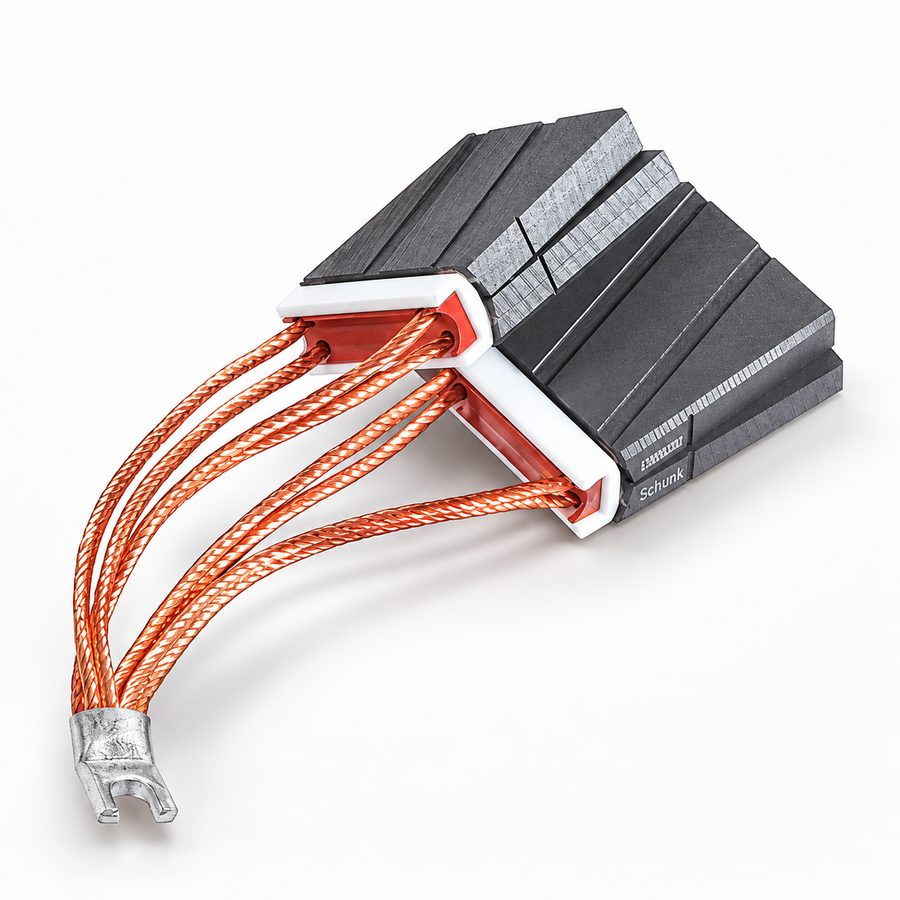
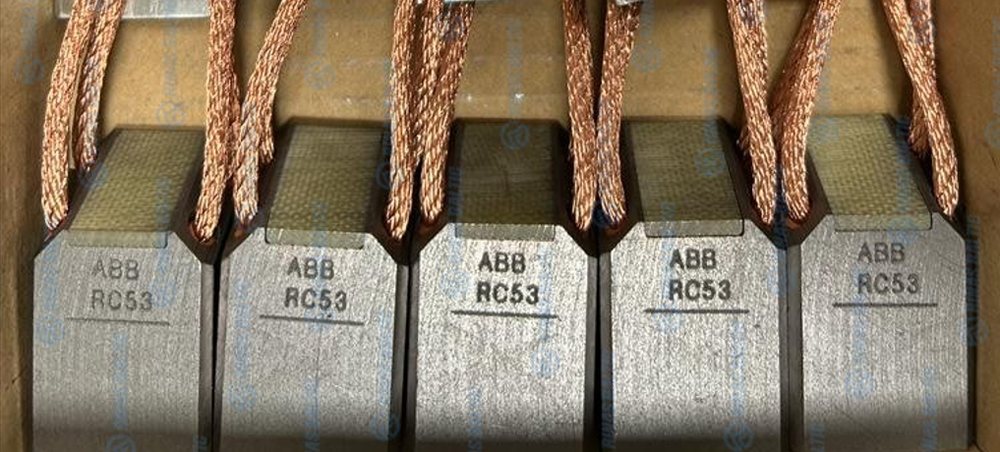
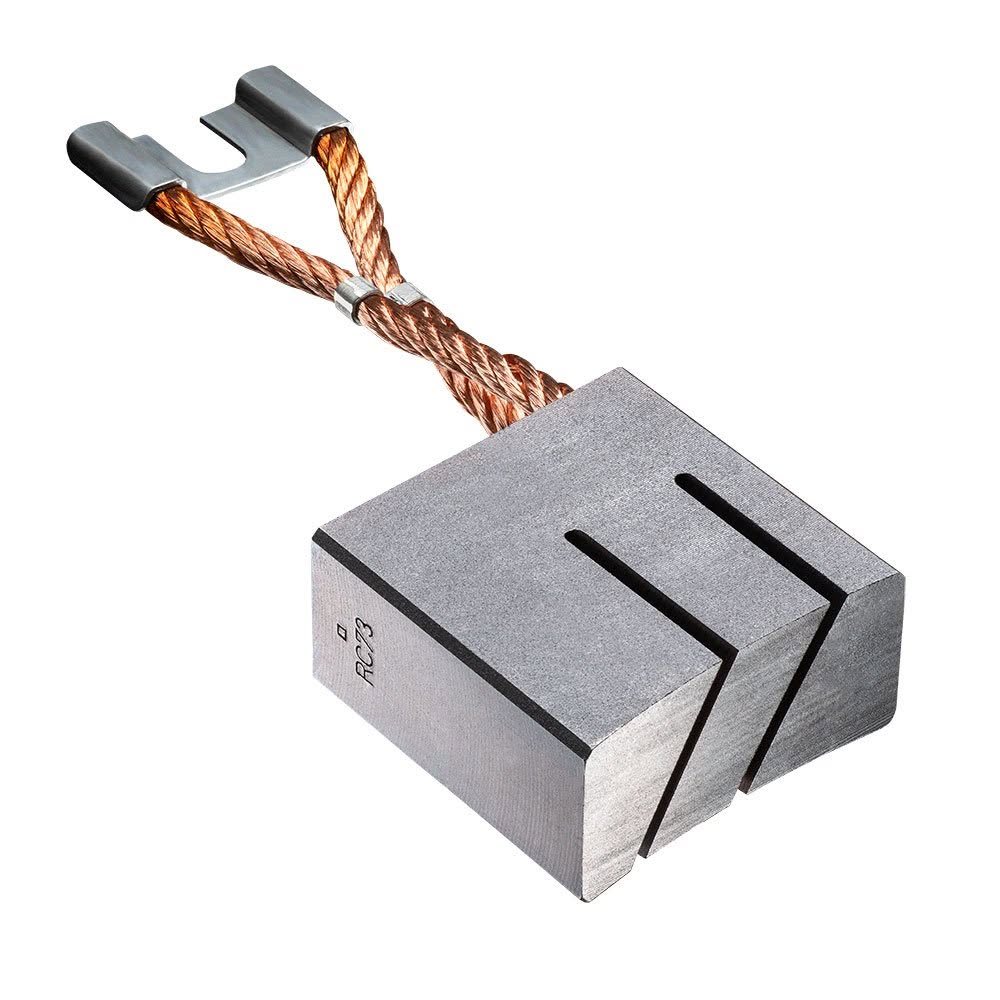
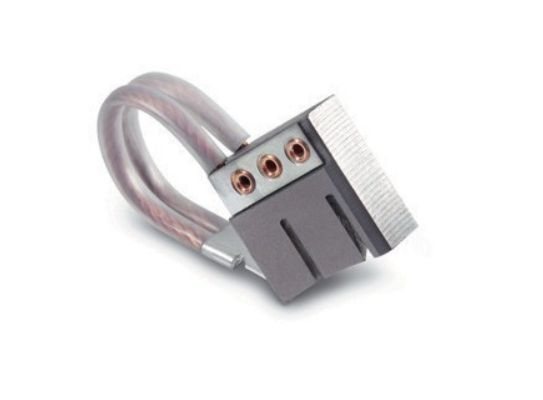
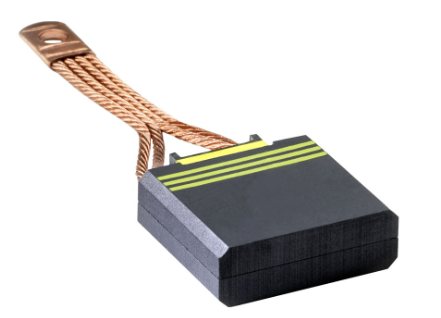

A mechanical and electrical part, working under friction
A brush is an electrical conductor subject to friction. It transfers a current – which may vary widely – between the rotating part of a machine and its fixed external power supply or load circuit.
Each brush works correctly within a range of speeds and electrical loads set by its material and assembly. Choosing one means matching its mechanical and electrical properties to the machine – including the friction behaviour of the commutator it runs on.
Six material families
Not sure which fits? Tell us about your machine and our engineers will recommend a grade.
Electro-graphite
Graphitized at very high temperature for good commutation and low friction.
Resin bonded
High-resistance material that helps control difficult commutation.
Pitch bonded
Carbon-graphite bonded with pitch for mechanical strength and stability.
Copper impregnated
Copper fills the pores to lower resistance and raise current capacity.
Silver impregnated
Silver content gives a very low, stable contact drop.
Copper graphite
High metal content for low-voltage, high-current service.
What we need to match your brush
The right grade lengthens the time between brush changes. Share these details – or simply send the old brush – and we’ll do the rest.
| Detail | Example |
|---|---|
| Brush dimensions (t × a × r) | 25 × 32 × 50 mm |
| Machine type | DC motor / generator / slipring |
| Rated speed | 1500 rpm |
| Current per brush | e.g. 40 A |
| Shunt & terminal | Length, cable size, terminal type |
| Operating conditions | Dust, humidity, temperature |
Where our brushes run
Get a price for your carbon brushes
Prices depend on type, size and quantity. Send your requirements – drawings and photos help – and our engineers will reply with a recommendation and quote.